Biomass energy is very efficient but it does come at a cost-to the environment and in dollars. The costs can be both advantages and disadvantages. There are many advantages to using biomass to create energy because the biomass that is burned is recycled because you’re using waste from other things-like wood waste, plant and animal tissue, wood and wood chips, straw manure and crop waste. This means that they’re not wasting things to burn because they’re using already used things to create the electricity. Another advantage is that using biomass to create energy saves landfill space because burning the waste to produce electricity means that the waste is no longer there and doesn’t go to the landfills. Using biomass to produce electricity reduces the pollution of water because there’s less waste to go in the water because it is being burned in biomass energy production. Another advantage is that fewer fertilizers and pesticides are used to grow the crops that are used to burn for biomass energy so there is reduced erosion because the pesticides and fertilizers damage the local environment so if they don’t use them, the environment is natural and not damaged. Using biomass is also good because some of the crops that are grown to burn to produce biomass energy provide more habitats for animals nearby which helps the ecosystems because the animals then have a habitat to live in. Also, pay for farmers goes up because they need farmers to grow the biomass to burn to create the energy so the farmers have more to do, meaning more money. Another advantage would be that farming crops to burn for biomass energy means that there are more plants to secure the soil down so this reduces erosion and helps the ecosystems around them. Using biomass also reduces pollution because some of the methane in biomass-like in sewage-can be captured and burned for head and power so it’s not going into the air. It is said that biomass produces fifteen times more energy and wind and solar powered energy combined; probably because solar and wind energy isn’t as reliable; there’s not sun and wind all year round while biomass is very available.
Even though there are many benefits of using biomass to produce energy there are also some disadvantages. One of the biggest disadvantages is that burning biomass creates pollution. Biomass creates pollution because in the process of making the energy, the biomass has to be burned. When the biomass is burned, there are a lot of smoke and pollutants that come from the burning that go into the air which makes it polluted and unclean. Also, if there is biomass sitting, waiting to be burned, the methane gasses that are in the biomass will escape from them and go into the air which will become greenhouse gases, which cause global warming. Another bad cost would be that we lose land because crops and trees that are being grown to create the energy are taking up space. Planting these crops and trees also means that more energy is used to plant, farm and harvest the crops and trees used to create the biomass energy. Water and fossil-fuels are used to create the fertilizers and fuels to plant and harvest the crops and trees so in a way, energy is lost by using biomass to create energy.
In terms of actual cost in dollars it doesn’t seem like a lot but it probably adds up to quite a bit in the end. In the Pacific Northwest the cost to generate power from biomass ranges from 5.2 to 6.7 cents per kilowatt-hour (which is 1000 watts working in one hour) but the cost depends on financing, location, system design and fuel cost but new technologies may lead to more money-efficient ways to make biomass energy!
Written by: Sarah Dunn
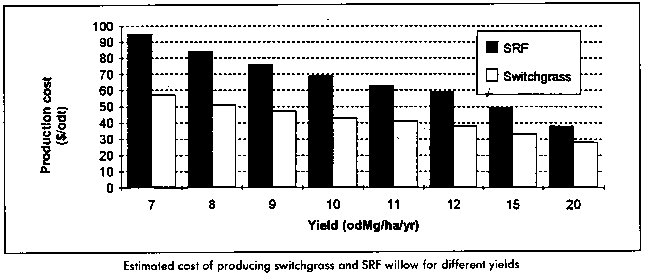
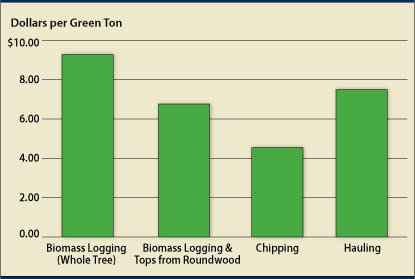
In the chart bellow, it shows the cost for switchgrass and SRF (means grown trees and crops) in dollars per odt (odt means one ton.) The Yield (odMg/ha/yr) is the amount of crops that they get out of the amount of land per year. In the diagram below, it shows the costs for lodgging, chipping and hauling the biomass. This chart is measured per green ton (a green ton is 2000 pounds of undried biomass material.) As you can see, the cost for logging, chipping and hauling the biomass isn't very expensive per every 2000 pounds or green ton. The most expensive is biomass logging (whole tree) which is about $8.75 and the least expensive is chipping which is about $4.25.